
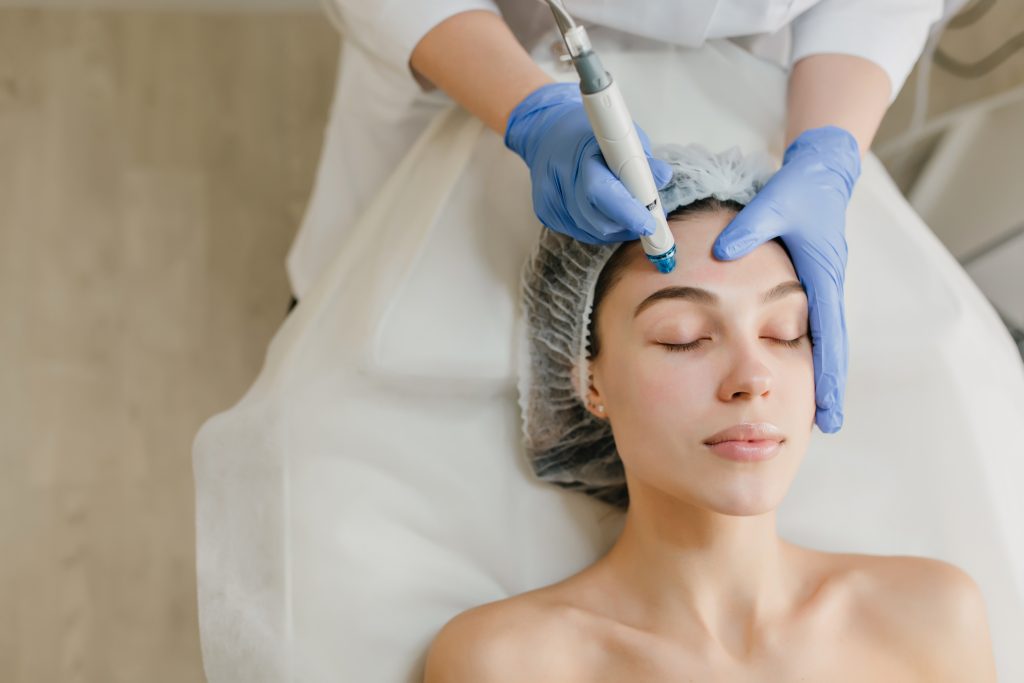
If you’ve seen HydraFacial mentioned everywhere — in med spas, on social media, in beauty publications — and wondered what does a HydraFacial actually do for your Skin? A Vancouver, WA Guide this guide is for you.
HydraFacial is one of the most popular facial treatments in the country, and there’s a concrete reason for that: it combines multiple steps that address different skin concerns in a single 30–45 minute session, with no downtime. But understanding what it actually does — and whether it’s right for your skin — helps you make a smarter decision before booking.
Here’s everything Vancouver, WA patients should know about HydraFacial.
What Is a HydraFacial?
HydraFacial is a patented, device-based facial treatment that uses a multi-step system to cleanse, exfoliate, extract, and hydrate the skin simultaneously. Unlike traditional facials that rely primarily on manual techniques, HydraFacial uses a vortex-fusion tip that creates a swirling suction and infusion motion — removing impurities while delivering serums deep into the pores at the same time.
The result is skin that looks immediately cleaner, brighter, and more hydrated — often visible right after a single session.
How Does HydraFacial Work? The Step-by-Step Process
Understanding the process helps explain why HydraFacial produces such consistent results across different skin types.
Step 1: Cleanse and Peel
A gentle vortex tip exfoliates the outer layer of dead skin cells while a mild chemical peel solution (glycolic and salicylic acids) loosens debris from the pores. This step removes surface buildup without the irritation of a traditional peel.
Step 2: Extract
The HydraFacial tip uses painless vortex suction to pull blackheads, sebum, and congestion out of the pores. This replaces manual extractions — which can cause redness and irritation — with a gentler, more effective method.
Step 3: Hydrate
Proprietary serums — including hyaluronic acid, peptides, and antioxidants — are infused directly into the freshly cleaned pores. Because the extractions just cleared the way, these ingredients absorb more effectively than they would on unprepared skin.
Optional Add-Ons (Boosters)
Most providers offer optional booster serums targeting specific concerns — growth factors for anti-aging, brightening agents for pigmentation, or salicylic acid for active acne. These are added during the hydration step.
What Skin Concerns Does HydraFacial Address?
HydraFacial is one of the most versatile facial treatments available because it works across a wide range of skin concerns rather than targeting just one.
Dullness and uneven tone Exfoliation removes the dead skin layer that makes skin look flat and tired, instantly revealing a brighter surface.
Clogged pores and congestion The extraction step pulls sebum, blackheads, and debris from pores — particularly effective for the nose, chin, and forehead.
Dehydration and dry skin The hyaluronic acid infusion in the hydration step plumps skin and restores moisture levels that cleansing and environmental exposure strip away.
Fine lines and early wrinkles The combination of exfoliation and peptide infusion supports surface smoothing and, over time, mild collagen stimulation.
Oily and acne-prone skin HydraFacial is one of the few professional facials gentle enough for acne-prone skin. The salicylic acid peel and extraction step reduce congestion without triggering post-inflammatory breakouts.
Sun damage and mild hyperpigmentation With the right booster serum, HydraFacial can target surface pigmentation and gradually improve uneven tone.
Sensitivity and redness Because HydraFacial avoids aggressive manual extractions and uses soothing serums, it’s often well tolerated by patients with sensitive or reactive skin.
What Does a HydraFacial Feel Like?
Most patients describe HydraFacial as relaxing and comfortable — often more like a spa treatment than a medical procedure.
The vortex suction tip creates a cool, slightly ticklish sensation as it moves across the skin. There’s no pain involved. Some patients feel mild warmth during the peel step, but it passes quickly.
Treatment time is typically 30 to 45 minutes for a standard session. With add-on boosters or a neck/décolletage treatment, sessions may run closer to 60 minutes.
Is There Any Downtime After a HydraFacial?
One of HydraFacial’s biggest advantages over other resurfacing treatments is that there’s essentially no downtime.
Immediately after treatment, skin may look slightly flushed for 30–60 minutes. Most patients describe their skin as glowing and refreshed within hours, with no peeling, flaking, or visible recovery period.
You can apply makeup and return to normal activities the same day.
What to avoid in the 24 hours after HydraFacial:
- Direct sun exposure without SPF
- Active skincare ingredients (retinol, strong vitamin C, acids)
- Heavy exercise or heat (saunas, hot tubs)
- Harsh cleansers
These precautions help preserve your results and protect freshly treated skin.
How Is HydraFacial Different from a Regular Facial?
A standard facial relies on manual techniques — steam, manual extractions, masks, and massage. Results vary significantly based on the esthetician’s skill, and manual extractions can cause post-treatment redness and breakouts.
HydraFacial uses a patented device that delivers consistent results regardless of technique variability. The simultaneous extraction-and-infusion mechanism is unique to the HydraFacial system and can’t be replicated manually.
| HydraFacial | Traditional Facial | |
| Exfoliation | Vortex tip + mild chemical peel | Manual scrub or enzyme |
| Extraction | Painless vortex suction | Manual (can cause irritation) |
| Hydration | Serum infused directly into pores | Topical mask or moisturizer |
| Results | Immediate, consistent | Variable |
| Downtime | None | Possible redness |
| Skin types | All skin types | Varies by technique |
How Is HydraFacial Different from Microneedling or a Chemical Peel?
HydraFacial, microneedling, and chemical peels each serve different purposes. Choosing between them depends on your skin concern and how much downtime you’re willing to accept.
HydraFacial is best for: maintenance, hydration, congestion, immediate glow, no downtime Chemical Peel is best for: surface pigmentation, moderate texture, sun damage, acne scarring (with downtime) Microneedling is best for: acne scars, deeper texture issues, collagen rebuilding (with 1–3 days recovery)
Many patients use HydraFacial as a regular maintenance treatment alongside quarterly microneedling or an annual chemical peel — each treatment targeting a different layer and concern.
How Often Should You Get a HydraFacial?
For general maintenance and skin health, most providers recommend one HydraFacial per month. The monthly cadence aligns with your skin’s natural cell turnover cycle (approximately 28–30 days), meaning each treatment works on a fresh layer of skin.
For specific concerns like congestion or dullness, monthly sessions produce cumulative improvement. For a one-time glow before an event, a single session 1–2 days beforehand delivers an immediate result.
Who Is a Good Candidate for HydraFacial?
HydraFacial is suitable for nearly all skin types and tones, which is one of its most significant advantages over more aggressive treatments.
Great candidates include:
- All skin tones (no risk of post-inflammatory hyperpigmentation)
- Sensitive or reactive skin that doesn’t tolerate chemical peels well
- Oily, congested, or acne-prone skin
- Dry or dehydrated skin
- Patients new to professional skincare who want a comfortable first experience
- Anyone looking for a no-downtime glow before a special event
HydraFacial may not be appropriate for:
- Active rosacea flare-ups
- Active cold sores or open skin lesions
- Pregnancy (consult your provider about booster ingredients)
- Certain skin conditions — your provider will assess during consultation
What Results Can You Realistically Expect?
After a single HydraFacial, most patients notice:
- Smoother, softer skin texture
- Reduced appearance of pores
- A brighter, more even tone
- More hydrated, plumped-looking skin
- Reduced congestion on the nose and chin
Results from a single session typically last 5–7 days, which is why regular monthly treatments are recommended for lasting improvement.
With a consistent HydraFacial routine over 3–6 months, patients notice cumulative improvements in skin texture, pore size, and overall skin clarity that go beyond what a single session produces.
How Much Does HydraFacial Cost in Vancouver, WA?
HydraFacial pricing varies based on the provider, the session length, and whether any booster add-ons are included. A standard session typically runs between $175 and $300 in the Vancouver, WA area.
Add-on boosters for anti-aging, brightening, or acne typically add $25–$75 to the base price.
Many med spas offer packages or membership pricing for patients who want to maintain a monthly HydraFacial routine, which can reduce the per-session cost significantly.
Frequently Asked Questions
What does a HydraFacial do for your skin? HydraFacial cleanses, exfoliates, extracts impurities from pores, and infuses hydrating serums in one treatment. It addresses dullness, congestion, dehydration, fine lines, and uneven tone with no downtime.
How long does a HydraFacial last? Results from a single HydraFacial typically last about a week. With monthly treatments, cumulative improvement in skin quality builds over time.
Is HydraFacial worth it? For patients who want a consistent, low-risk, no-downtime facial with immediate visible results, HydraFacial is consistently rated as one of the best value treatments in medical aesthetics.
How often should I get a HydraFacial? Once a month is the standard recommendation for ongoing skin maintenance. For a special event, one session 1–2 days before is ideal.
Can HydraFacial help with acne? Yes. HydraFacial with a salicylic acid booster is effective for oily, congested, and acne-prone skin. The extraction step removes blackheads and sebum without causing irritation or triggering breakouts.
Does HydraFacial hurt? No. Most patients describe the experience as comfortable and relaxing. The vortex tip creates a mild suction sensation, but there’s no pain involved.
Can I get a HydraFacial if I have sensitive skin? Yes — HydraFacial is one of the most gentle professional facial treatments available and is often recommended specifically for sensitive skin types.
Ready to Experience HydraFacial in Vancouver, WA?
If you’re looking for a facial that delivers results you can actually see — brighter, cleaner, more hydrated skin with zero downtime — HydraFacial is worth trying.
Prime Med Spa – Vancouver 1015 W Columbia Way, Suite B, Vancouver, WA 98660 📞 +1 971-777-0303 Call or book online to schedule your HydraFacial consultation.
