
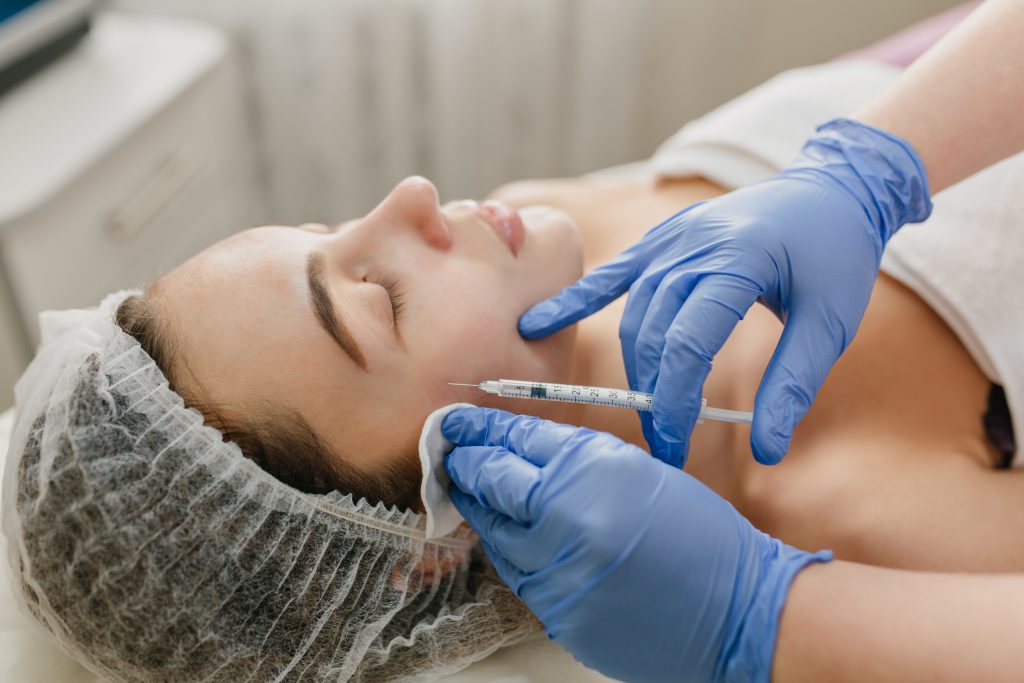
If you’ve been thinking about Botox but aren’t sure what to expect — or you’ve Googled “botox cost” and found wildly different prices — units are usually why. Botox isn’t priced as a flat fee for a treatment area. It’s priced per unit, and the number of units you need depends on your muscles, your goals, and where you’re treating.
This guide breaks it down clearly: what units mean, how many are typically needed for each area, what affects your individual dose, and what patients in Portland can expect to pay.
What Is a Botox “Unit”?
A unit is simply a measurement of the active ingredient — botulinum toxin type A — in each injection. Different brands (Botox, Dysport, Xeomin) use different unit scales, which is why comparing prices across brands requires a bit of math. This guide focuses on Botox (onabotulinumtoxinA), the most widely used brand.
More units = stronger or longer-lasting effect in that muscle. The right number depends on how strong your facial muscles are, how expressive your movements are, and how much smoothing you want.
How Many Units Does Each Area Typically Need?
These are standard clinical ranges. Your provider will assess your muscles during consultation and recommend the right dose for you specifically.
Forehead Lines
Typical range: 10–30 units
The forehead is one of the most requested areas. The number of units depends on how high your hairline is, how strong your frontalis muscle is, and whether you want full relaxation or just softening. Overtreating the forehead without also treating the brow can cause a heavy, dropped-brow feeling — which is why experienced providers treat the forehead and brow together.
Frown Lines (Glabellar / “11s”)
Typical range: 20–40 units
The muscles between your brows — the corrugators and procerus — are often the strongest muscles on the face. Most patients need at least 20 units here for a visible result. Those with particularly strong frown muscles may need closer to 40 units.
Crow’s Feet
Typical range: 10–15 units per side (20–30 units total)
The orbicularis oculi muscle around each eye requires treatment on both sides. Most patients fall somewhere between 10–15 units per side. Crow’s feet are one of the most satisfying areas to treat because results look natural and refreshed rather than frozen.
Brow Lift
Typical range: 2–5 units
A small dose placed under the tail of the brow can create a subtle lift without requiring surgery. This is often added on to forehead or crow’s feet treatment at minimal extra cost.
Bunny Lines (Nose Scrunch)
Typical range: 5–10 units
The nasalis muscle on either side of the nose creates diagonal lines when you scrunch or smile. This is a minor add-on treatment that pairs well with forehead and glabellar treatments.
Lip Lines / Lip Flip
Typical range: 4–6 units
A small amount of Botox placed in the orbicularis oris (the muscle around the mouth) can flip the upper lip slightly outward, making it appear fuller without filler. This is not a replacement for lip filler — it’s a subtle enhancement.
Masseter (Jaw Slimming / Teeth Grinding)
Typical range: 25–50 units per side (50–100 units total)
Masseter Botox requires significantly more product than facial areas because the masseter is a large, powerful chewing muscle. Patients use it for jaw slimming (for a softer facial shape) or to reduce teeth grinding and jaw tension. This is one of the higher-cost Botox treatments due to the volume of product required.
Neck Bands (Platysmal Bands)
Typical range: 25–50 units total
Vertical neck bands become more visible with age. Botox can relax the platysma muscle to soften their appearance. Results are subtle but effective for early to moderate banding.
Hyperhidrosis (Excessive Sweating)
Typical range: 50–100 units per underarm
When Botox is used for excessive underarm sweating, larger amounts are needed to block the nerve signals to sweat glands across the entire area. This is one of the most life-changing uses of Botox for patients who qualify.
What Affects How Many Units You Need?
Your personal dose is never just about the treatment area. Several individual factors influence how much product is right for you.
Muscle strength and size Larger, more active muscles require more units to achieve the same result. Men typically have stronger facial muscles than women and often need 20–30% more units in the same areas.
Treatment goals Do you want complete relaxation of movement, or just softening? Patients who prefer to keep some movement need fewer units. Those who want a more polished, static result need more.
Age and skin condition Younger patients may need fewer units to see results. With age, fine lines can become static (present at rest), which Botox alone may not fully resolve — filler or resurfacing may be needed alongside.
Previous Botox history First-time patients sometimes need a slightly higher dose to see full results. Patients who maintain regular appointments often find their dose becomes more consistent over time.
Metabolism Faster metabolism = faster breakdown of Botox. Some patients find results last 3 months, others 4–5. This varies person to person and isn’t always predictable.
How Much Does Botox Cost in Portland, OR?
Botox in Portland is typically priced per unit, ranging from $12 to $18 per unit depending on the provider, location, and level of expertise.
At those rates, here’s what common treatment areas typically cost:
| Treatment Area | Typical Units | Estimated Cost |
| Forehead | 10–30 units | $150–$540 |
| Frown lines (“11s”) | 20–40 units | $300–$720 |
| Crow’s feet (both sides) | 20–30 units | $300–$540 |
| Full upper face (all three) | 40–80 units | $600–$1,440 |
| Brow lift | 2–5 units | $30–$90 |
| Lip flip | 4–6 units | $60–$108 |
| Masseter (both sides) | 50–100 units | $750–$1,800 |
| Hyperhidrosis (per underarm) | 50–100 units | $750–$1,800 |
Estimates only. Actual pricing depends on your provider and the specific units recommended at consultation.
A note on flat-rate pricing: Some med spas advertise flat fees per area rather than per unit. This can be convenient, but make sure you understand what’s included — a flat rate for “forehead” that includes only 10 units won’t deliver the same result as one that covers 20–25 units.
Botox vs. Dysport: Does It Affect How Many Units You Need?
Yes. Dysport uses a different unit measurement than Botox. As a general rule, Dysport units are smaller, so you typically need roughly 2.5 Dysport units for every 1 Botox unit to achieve the same effect.
This doesn’t mean Dysport is less effective — many patients prefer it. But it does mean that comparing prices requires accounting for the different unit scales.
How Often Will You Need to Come Back?
Most patients return every 3 to 4 months for maintenance. Some patients — particularly those with slower metabolisms or who have been getting Botox consistently for years — find that results last 4 to 5 months.
With regular treatment, some patients find they need slightly fewer units over time, as the treated muscles gradually weaken from consistent relaxation.
Is More Always Better?
No. More Botox is not always better — and in some areas, too many units can cause problems.
- Forehead overtreated without addressing the brow can cause a heavy, drooping brow
- Too much lip flip Botox can make it difficult to use a straw or pronounce certain sounds
- Crow’s feet overdone can affect natural smiling
The goal of Botox at a skilled med spa isn’t maximum freezing — it’s targeted, proportional relaxation that looks natural on your face.
Frequently Asked Questions
How many units of Botox do I need for my first treatment? Most first-time patients treating the full upper face (forehead, frown lines, crow’s feet) will need between 40 and 64 units total. Your provider will assess your muscle strength and recommend the right starting dose during consultation.
Is Botox priced per area or per unit in Portland? Most reputable med spas in Portland price Botox per unit, typically between $12 and $18 per unit. Some providers offer flat-rate area pricing — just confirm what’s included.
How do I know if I need more units next time? If your results fade before 3 months or don’t look as smooth as expected, you may benefit from additional units in certain areas. Always follow up with your provider.
Can I start with fewer units and add more? Yes — this is a common and smart approach for first-time patients who want to see how their muscles respond before committing to a full dose.
Does Botox hurt? Most patients describe Botox injections as minor pinpricks. The needles are very fine, and treatment is quick. Numbing cream can be applied beforehand if preferred.
How long does Botox last in Portland, OR? Results typically last 3 to 4 months for most patients. Masseter and hyperhidrosis treatments may last slightly longer — up to 6 months in some cases.
Ready to Find Out What You Need?
The only way to know exactly how many units are right for you is a personalized consultation. Every face is different, and a qualified provider will assess your muscle strength, movement, and goals before recommending a treatment plan.
Prime MedSpa 5635 NE Alameda St, Portland, OR 97213
📞 +1 971-777-0303
Call or book online to schedule your Botox consultation.
