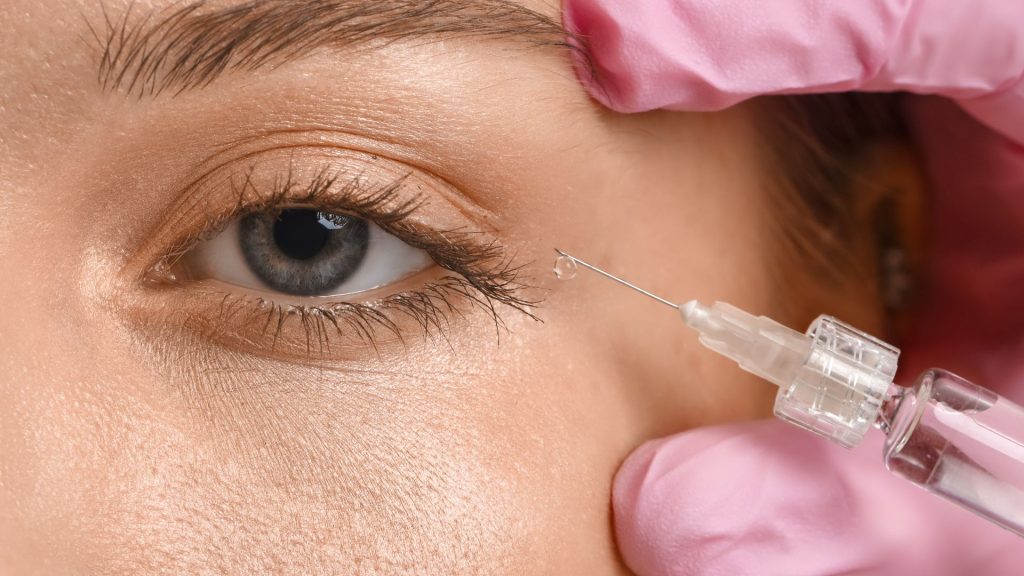
The under-eye area is one of the most requested, and most misunderstood, treatment zones in aesthetic medicine. Patients come in knowing they look tired, hollow, or shadowed, but most aren’t sure what’s actually causing it or whether filler is even the right solution.
This guide is for you if you’re still in the research phase: figuring out whether under-eye filler makes sense for your concerns, what to realistically expect, and how to walk into your consultation already knowing the right questions to ask.
Why the Under-Eye Area Is So Complicated
Before choosing a filler, it helps to understand why this area behaves differently from everywhere else on the face.
The skin under the eye is the thinnest on the body, roughly 0.5mm compared to 2mm elsewhere. Beneath it sits a small fat pad that provides cushioning between the skin and the orbital bone. As we age, this fat pad thins and shifts, creating the hollowed appearance known as the tear trough.
What makes treatment here uniquely challenging:
- Thin skin means overfilling or improper placement shows immediately as puffiness or a bluish tint (the Tyndall effect)
- The area is highly vascular, increasing bruising risk
- Results are extremely technique-dependent, the same product can look natural or unnatural depending entirely on where and how it’s placed
- Not everyone is a good candidate, even if they think they are
This is why provider experience matters more here than almost anywhere else on the face.
Step 1: Identify What You’re Actually Treating
Under-eye concerns generally fall into three categories, and each responds differently to treatment.
Hollowness (tear trough): True hollowness is caused by volume loss in the fat pad beneath the eye. This is the most appropriate indication for filler and typically responds very well to strategic placement of a thin, hydrophilic hyaluronic acid filler.
Dark circles: Dark circles have multiple causes, some are vascular (visible blood vessels through thin skin), some are pigmentary (melanin), and some are structural (hollowness causing shadow). Only structural dark circles caused by volume loss respond well to filler. Vascular or pigmentary dark circles require different treatments entirely.
Puffiness or bags: True under-eye bags caused by fat herniation are not improved by filler and may actually be worsened by it. This is an important distinction your provider will assess during consultation.
Knowing which category best describes your concern helps you set realistic expectations before you walk through the door.
Step 2: Understand Which Fillers Are Used Under the Eyes
Not every dermal filler is appropriate for the under-eye area. The wrong product can migrate, create lumpiness, or absorb too much water and cause swelling.
What to look for in an under-eye filler:
- Low viscosity (thin consistency) for smooth, natural placement in delicate tissue
- Low water absorption to reduce swelling risk
- Soft, flexible consistency that moves naturally with facial expressions
- Reversible with hyaluronidase (this matters, you want something that can be dissolved if needed)
Common hyaluronic acid fillers used in this area include Restylane and Juvederm, though specific product selection should be guided by your provider based on your anatomy and the degree of hollowness.
For a detailed breakdown of how Juvederm and Restylane compare for under-eye treatment, see our full comparison guide.
Step 3: Know Whether You’re a Good Candidate
Under-eye filler is not right for everyone, and an honest assessment during consultation is what separates a good outcome from a disappointing one.
You may be a strong candidate if:
- Your concern is primarily hollowness or shadow caused by volume loss
- Your skin has reasonable elasticity and isn’t severely lax
- You have realistic expectations for subtle, natural improvement
- You understand results typically last 6 to 12 months
You may not be the right candidate if:
- Your primary concern is true eye bags caused by fat herniation
- You have significant skin laxity or excess skin under the eye
- Your dark circles are primarily vascular or pigmentary in origin
- You have a history of certain medical conditions affecting healing or clotting
Your provider will assess all of this at consultation, which is precisely why the consultation matters so much for this particular treatment.
Step 4: Questions to Ask at Your Consultation
Walking in prepared makes your consultation significantly more productive. Here are the questions worth asking:
- What is causing my under-eye appearance, is it hollowness, fat herniation, or something else?
- Am I a good candidate for filler, or would another treatment serve me better?
- Which specific filler product do you recommend for my anatomy, and why?
- How much product do you anticipate using?
- What does realistic improvement look like for my specific concern?
- What happens if I don’t like the result, can it be reversed?
- What is the risk of the Tyndall effect with my skin tone and thickness?
A provider who answers these questions thoroughly and honestly, including being direct about what filler cannot fix, is a provider worth trusting with this treatment.
Step 5: Understand the Cost Before You Go
Under-eye filler in Portland typically ranges between $700 and $1,200 per syringe, with most patients requiring 1 to 2 syringes for optimal correction. Cost varies based on the filler product used, the provider’s experience, and the degree of treatment needed.
For a full breakdown of under-eye filler pricing in Portland, see our cost guide for under-eye filler in Portland, OR.
What to Expect at a Prime MedSpa Consultation
At Prime MedSpa Portland, your under-eye consultation includes a thorough assessment of your facial anatomy and the underlying cause of your concerns before any treatment recommendation is made.
Your consultation covers:
- A physical assessment of the tear trough and surrounding anatomy
- Honest evaluation of whether filler is the appropriate treatment for your specific concern
- Product recommendation based on your skin type, anatomy, and goals
- Realistic result expectations with and without treatment
- Full cost transparency before booking
There is no obligation to book at the consultation, the goal is to make sure you leave with the information you need to make a confident decision.
Frequently Asked Questions
The best way to determine this is a professional consultation. In general, hollowness and shadow caused by volume loss respond well to filler, while eye bags from fat herniation or dark circles from pigmentation require different approaches.
The Tyndall effect is a bluish discoloration caused by filler placed too superficially under thin under-eye skin. It is avoided by using the correct filler product and placing it at the appropriate depth, which is why provider experience is critical for this treatment.
The Tyndall effect is a bluish discoloration caused by filler placed too superficially under thin under-eye skin. It is avoided by using the correct filler product and placing it at the appropriate depth, which is why provider experience is critical for this treatment.
Most patients see results lasting 6 to 12 months. Individual longevity depends on metabolism, the specific product used, and lifestyle factors.
Yes. Hyaluronic acid fillers used in this area can be dissolved with hyaluronidase if you are unhappy with the result or experience a complication.
Pricing typically ranges between $700 and $1,200 per syringe in Portland. See our complete under-eye filler cost guide for a full breakdown of what affects pricing.
Ready to Take the Next Step?
If you’ve been researching under-eye filler and want a thorough, honest assessment of whether it’s right for your specific concerns, Prime MedSpa Portland is here to help, starting with a no-pressure consultation.
Prime MedSpa 5635 NE Alameda St, Portland, OR 97213
📞+1 971-777-0303 Call or book online to schedule your consultation.